Blockudoku®: Block Puzzle Game
- 4.6
- Rating
- 100.00M
- Installs
- Free
- Price

 Analysis by App-foxy
I usually reach for a puzzle game when I want something absorbing without committing to a long session. Blockudoku® fits that habit unusually well. It takes the familiar placement of falling-block puzzles, removes the pressure of pieces dropping in real time, and combines it with the clearing logic of a Sudoku-style grid. The result feels calm at first, but it still creates the kind of small decisions that can turn a quick break into a surprisingly focused challenge.
After spending time with it, I see why this free puzzle game from Easybrain has become so widely used. It has passed 100 million installs and holds a 4.6 average from about 1.3 million ratings, which matches my impression that the basic idea is immediately accessible. You do not need a tutorial-heavy introduction or knowledge of traditional Sudoku. The board explains itself through play: place shapes, complete lines and regions, and protect enough open space to keep the run alive.
That simplicity is also the main thing to understand before downloading. This is not a story-driven game, a competitive multiplayer experience, or a demanding test of reflexes. It is a quiet, repeatable solo puzzle built around planning. I would recommend it to someone who likes Tetris-like shapes but wants more time to think. I would be less enthusiastic for anyone looking for dramatic progression, a rich setting, or constant novelty.
You May Also Like

 AccuWeather: Weather Radar
AccuWeather Review: A Quick, Clear Forecast for Everyday Decisions
For everyday plans, the best forecast is the one you can understand quickly. AccuWeather makes rain timing, radar, and local conditions easy to act on, with a few trade-offs.

 Hill Climb Racing
Why Hill Climb Racing Still Turns Crashes Into One More Run
A tiny car, a bumpy hill and one more upgrade: Hill Climb Racing keeps resurfacing because its simple chaos makes every near-miss feel personal.

 AliExpress - Shopping App
AliExpress Makes Global Shopping Feel Personal, but Shoppers Bear the Risk
AliExpress turns a global marketplace into a pocket-sized discovery engine. Its reach is useful, its shopping loop compelling, and its trade-offs easy to miss.

 Lords Mobile: Kingdom Wars
Lords Mobile Is a Kingdom-Building Routine, Not a Quick Match
A case-by-case verdict on the building, battles, device demands, and social commitments that make Lords Mobile rewarding for some players and exhausting for others.

 PDF Scanner app - TapScanner
TapScanner Makes Paperwork Easier to Capture, Check, and Share
TapScanner makes scanning with a phone feel less like a rescue operation and more like a dependable step in getting work done. Its capture tools are useful, though not flawless.

 Block Blast!
 Shows How Much a Puzzle Game Can Leave Out
A quiet grid game shows why puzzle players increasingly value instant clarity, repeatable skill and low-pressure play—and where the genre still needs to catch up.
More From Our News Desk
View All News


Why the first few rounds feel so approachable
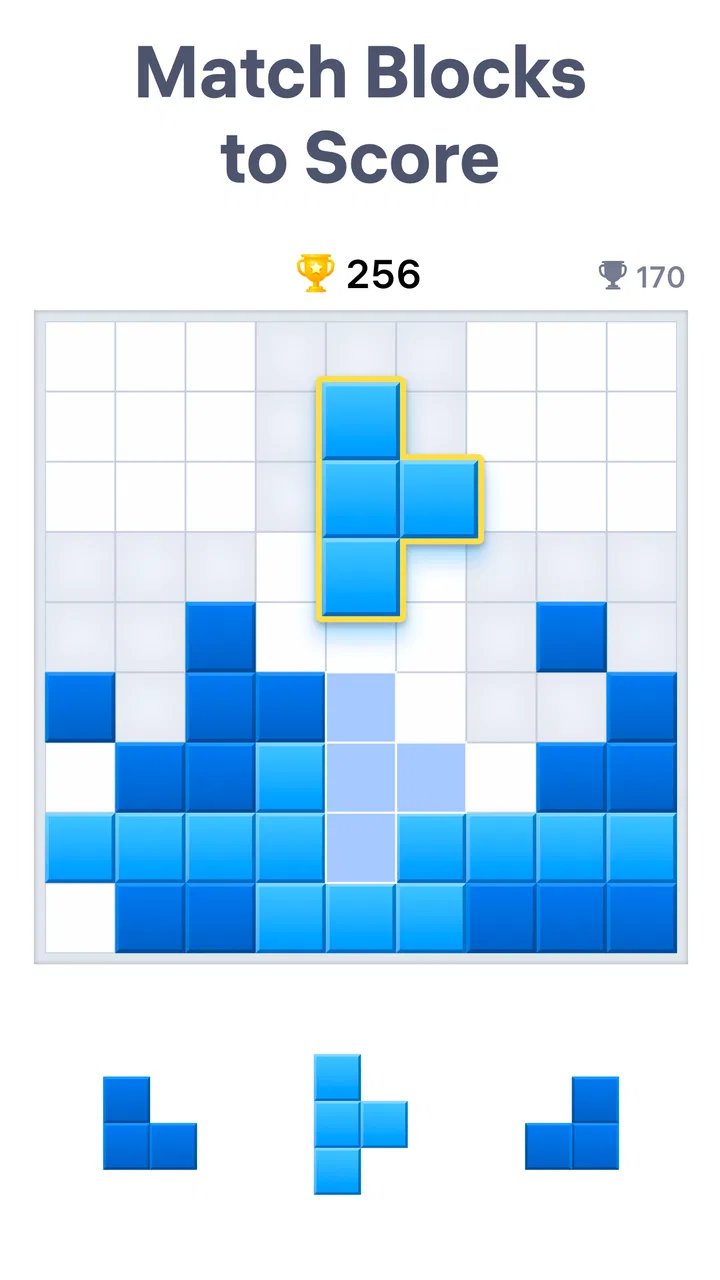
The opening impression is clean and practical. The board is the star, and the visual arrangement makes the goal understandable without burying it under menus or decorative clutter. You receive block shapes and decide where they belong on a grid that rewards both completed rows and completed columns. The Sudoku influence appears in the smaller square regions, so a move can be useful in more than one way at once.
That layered clearing system gives the game its identity. In a standard falling-block game, I tend to think about keeping the stack low and preparing for the next piece. Here, I think about preserving patterns. A shape that looks awkward may be valuable because it fills a nearly complete region, while an apparently convenient placement can split the board into unusable pockets. The absence of a timer gives me room to inspect the board, but it does not remove consequences.
The free entry point matters. I can install it without paying, try several rounds, and decide whether the loop suits me before spending anything. The age rating is Everyone, which reflects the straightforward presentation and nonviolent subject matter. Optional purchases are listed at $14.99 per item, so I would approach those carefully and treat the free experience as the sensible starting point.
One useful habit is to avoid placing the first available shape immediately. I look at all the pieces currently offered, identify the one with the fewest possible homes, and place that one first. This is more reliable than simply filling the largest empty space. It also reveals whether I am creating a future trap. The game looks casual, but this small change in order makes the difference between reacting and actually planning.
A board that rewards leaving room
The most important resource is not a visible currency; it is flexibility. I try to keep several kinds of empty space available rather than building a neat-looking cluster in one corner. Narrow gaps can be more useful than broad empty areas because they accept particular shapes, but they can also become dead ends if I surround them too early.
When the board begins to look crowded, I stop thinking about immediate points and start thinking about recovery. Completing a single line may be less valuable than arranging two pieces so that a row and a square region can disappear together. This is one of the less obvious strengths of the design: the scoring opportunity is often created one or two moves before it becomes visible.
I also recommend treating awkward pieces as planning tools instead of unwanted interruptions. A longer bar can repair a row, while a compact square may fit a region that would otherwise remain blocked. If I use every easy piece as soon as it appears, I often leave myself with no answer for the difficult shape that follows. Saving space for the inconvenient option is a practical skill here.
The visual language keeps the puzzle readable
The art direction is restrained rather than expressive. Blocks are presented as clear, colorful units, and the board acts like a visual map of possible decisions. There is no elaborate fictional world competing for attention, but that is appropriate for this type of game. The setting is the grid itself: a small, orderly space where balance, symmetry, and disruption communicate more than characters or scenery could.
I find that visual restraint helps during longer sessions. Because the board remains legible, I can scan it quickly and compare several placements without decoding layers of decoration. The colors help distinguish pieces and completed areas, while the simple presentation keeps the focus on shape and position. For a puzzle that depends on noticing gaps, that clarity is more valuable than visual spectacle.
The trade-off is that players who need a strong theme may find the presentation plain. There is no narrative reason to return, no changing landscape to discover, and no character-driven context that gives a failed round emotional meaning. The mood comes from arranging the board rather than inhabiting a world. I see that as a deliberate fit for short, repeatable play, not as a missing feature that every player will overlook.
On a practical level, the uncluttered design makes it suitable for situations where I only have partial attention, although I would not play while doing something that requires safe concentration. A short round can sit naturally between errands, during a quiet commute, or while waiting for an appointment. The board is easy to understand at a glance, but the better decisions still reward giving it my full attention.
Sound and the pace of a thoughtful session
The strongest mood comes from pacing rather than spectacle. Since pieces do not force me to act at high speed, the experience has a measured rhythm: inspect, place, clear, reassess. That cycle makes the game feel closer to a tabletop brain teaser than an arcade challenge. I can pause mentally between moves, which is especially welcome when I am tired or want a low-pressure way to occupy my hands.
Sound plays a supporting role in that rhythm. It does not need to dominate the screen because the satisfaction is already visible when a line or region clears. The overall presentation works best when audio remains secondary, allowing the board to provide the feedback. I often think of it as a game that can accompany a quiet moment rather than demand the room's attention.
This measured tempo is an important contrast with conventional block-dropping games. Those games create excitement through falling speed and emergency rotations. Here, tension grows from the board becoming less forgiving. I am not racing a clock; I am racing my own accumulation of poor choices. That makes the challenge less stressful, but it can also feel less energetic if I want constant motion or immediate reactions.
The pacing changes naturally as the board fills. Early moves feel exploratory because several placements appear safe. Later moves become more deliberate, and a single cleared region can restore breathing room. I like that escalation because it comes from the state of the puzzle rather than from an artificial countdown. The quiet mood survives even when the decision-making becomes intense.
How the mechanics fit together
The central mechanics are easy to learn but difficult to exhaust. Blocks must be fitted into the grid, and clearing rows, columns, and smaller regions creates space for the next set. The combination means I am constantly balancing short-term relief against long-term structure. A move that clears something now may damage the shape of the remaining board, while a move that appears passive may prepare a much stronger chain.
My preferred workflow is to scan in three passes. First, I check whether any piece has only one realistic location. Second, I look for a placement that completes more than one objective, such as a line and a region. Third, I inspect the empty spaces that will remain after the clear. That final step is where many mistakes happen. A successful clear is not automatically a good move if it leaves behind isolated holes that future pieces cannot use.
Another useful technique is to think in terms of board texture. Open rectangles are versatile, but they can tempt me into filling them too quickly. A varied board with a few carefully protected gaps may offer more options than a large solid area. I try to preserve at least one location for a bulky shape and one location for a narrow shape. This is not a guaranteed solution, but it reduces the number of turns where I am forced into an ugly placement.
The high-score structure gives the loop a personal target without requiring a social leaderboard. I can finish a round, remember the score, and try to improve my own decision-making. That works well for players who enjoy gradual mastery. It is less satisfying for someone who needs unlockable chapters, collectible rewards, or a clear campaign endpoint. The game is about refining judgment, not completing a content schedule.
There is also a psychological trade-off in the lack of a fixed finish line. Because the basic activity remains available, I can return whenever I want, but the motivation has to come from the puzzle itself. After several sessions, the familiar board can feel repetitive if I am not interested in improving. I would skip it if I wanted a puzzle game with frequent new rules or a strong sense of progression.
Where it differs from familiar alternatives
Compared with traditional Sudoku, this is more spatial and less number-based. I do not need to track symbols or candidate values; I need to understand shape, orientation, and empty space. Someone who finds classic Sudoku too abstract may appreciate the immediate visual feedback here. On the other hand, a dedicated Sudoku app will usually provide more structured puzzle variety and a clearer sense of solving a defined problem.
Compared with a falling-block game, the biggest difference is control over time. I can examine the board before committing, so the challenge is strategic rather than reflexive. That makes it friendlier for relaxed play and for people who dislike losing because they could not move quickly enough. Players who enjoy speed, rotations, and escalating pressure may find this version too gentle.
Compared with match-three puzzles, the satisfaction is more deliberate. There is no need to wait for a chain reaction to reveal the next possibility; I create the clearing pattern myself. That gives placements more ownership, but it also means mistakes feel more directly connected to my planning. I would choose this game when I want a quiet mental exercise, and a match-three title when I want brighter, faster reward cycles.
It also works differently from puzzle games built around handcrafted levels. There is no single intended solution that I can study and reproduce. The challenge comes from adapting to the current arrangement and the shapes available. That gives it replay value, but it can occasionally feel less fair when the board develops in an inconvenient direction. The appeal is improvisation, not solving a carefully authored riddle.
Who will enjoy it, and who should pass
I think it is a strong choice for commuters, casual puzzle players, and anyone who likes improving a personal high score in short sessions. It is especially suitable for people who enjoy visual organization and can find satisfaction in making a crowded board orderly again. The Everyone rating and simple controls also make it approachable for a broad household audience.
I would recommend caution for players who are sensitive to repetitive loops or who expect every game session to offer a new objective. The core board-and-block structure is the product, so its appeal depends on whether that structure remains interesting after the first excitement fades. I would also point competitive players toward a game with direct multiplayer or more formal ranking systems if comparison with others is their main motivation.
On my phone, I would use it as a deliberate reset rather than as background entertainment. For example, after finishing work, I might play one round while waiting for dinner, using the first few moves to shift attention away from the day. If I notice myself placing pieces automatically, I stop, because the game is most enjoyable when I am making choices rather than merely filling time.
Device compatibility is straightforward for many users: the current version is 3.24.0 and requires Android 8.0 or later. That makes checking the operating system worthwhile before installing on an older device. The game is free to start, while individual in-app purchases can reach $14.99, so I would review any purchase prompt rather than assuming every convenience is included at no cost.
My final view of the atmosphere and the loop
What stays with me is the coherence between presentation and mechanics. The uncluttered art makes the grid readable, the restrained sound supports rather than interrupts, and the unhurried pace gives each placement room to matter. Nothing is trying to turn the puzzle into an adventure it is not. The atmosphere is orderly, quiet, and mildly tense, which is exactly what the shape-clearing system needs.
The best reason to play is the balance between calm pacing and meaningful consequences. I can approach a round casually, but careless decisions still accumulate. The game respects a player's time with an instantly understandable board, then gradually asks for better planning. Its most rewarding moments come when a move solves the current problem while preserving options for the next one.
My reservations are equally clear. The presentation may feel bare to players who want a story or a vivid setting, and the repeated structure will not satisfy everyone indefinitely. The purchase price attached to individual in-app items also deserves attention from anyone trying to keep the experience strictly free. Those points do not undermine the core puzzle, but they shape who will enjoy returning to it.
Overall, I would recommend Blockudoku® to anyone looking for a free, thoughtful block puzzle that sits between Sudoku and falling-block games without copying either one completely. It is not the right choice for fast action or narrative depth, but it is an excellent companion for short pauses and quiet concentration. Easybrain has built its mood from clarity, space, and rhythm, and when I want a puzzle that lets me think before I move, this is one I am happy to open.
FAQs for Blockudoku®: Block Puzzle Game
01What is the main objective of Blockudoku®?
Blockudoku® combines elements of sudoku and block puzzle games. The main objective is to strategically place blocks on the board to complete lines and squares. Clearing lines and squares earns points, and the game continues until no more moves can be made. It’s a test of logic and strategy.
02Is Blockudoku® suitable for all ages?
Yes, Blockudoku® is designed for players of all ages. Its intuitive gameplay mechanics are easy to understand, making it suitable for children, while its strategic depth offers a challenge for adults. It’s a great way to improve problem-solving skills and cognitive abilities.
03Does Blockudoku® require an internet connection to play?
Blockudoku® can be played offline, which means you don't need an internet connection to enjoy the game. This makes it perfect for playing on the go, whether you’re commuting, traveling, or in areas with limited connectivity.
04Are there any in-app purchases in Blockudoku®?
Yes, Blockudoku® offers in-app purchases. While the game is free to download and play, there are optional purchases available that can enhance the gaming experience, such as removing ads or unlocking new themes and challenges. These purchases are not necessary to enjoy the core game.
05How does Blockudoku® handle ads?
Blockudoku® is a free-to-play game, so it includes ads. However, players have the option to remove ads through a one-time in-app purchase. This can provide an uninterrupted gaming experience, allowing players to focus solely on puzzle-solving without distractions.
Pros
- Simple yet challenging gameplay.
- Visually appealing design.
- Offers daily puzzles for variety.
- No time limits
- play at your pace.
- Helps improve spatial awareness.
Cons
- Contains in-app ads.
- Limited game modes available.
- No multiplayer option.
- Can become repetitive over time.
- Requires internet for full features.

Blockudoku®: Block Puzzle Game
Gallery